Quick answer
What is the Bannerghatta safari?
It is the vehicle-based part of Bannerghatta Biological Park. Closed buses and jeeps, provided by the park in partnership with the Karnataka State Tourism Development Corporation (KSTDC), take visitors through a sequence of purpose-built safari areas. The exhibits echo the adjoining dry and moist deciduous forest, while keeping animals, staff and visitors safely separated.
How the safari works
The route is divided into herbivore, bear, leopard, lion and tiger sections. Your guide and vehicle remain on the designated route; animal movements, compatible social groups and the exact order can change for welfare or operational reasons. That makes each drive different—and means a close view of any particular animal is never guaranteed.
Stay inside the park-arranged vehicle and follow the guide’s instructions at all times.
Expect habitats for herbivores, sloth bears, leopards, lions and tigers.
Safari capacity is limited. Make it your first priority if it is the reason for your visit.
The park lists the safari from 10:00 AM to 4:30 PM and is closed on Tuesdays. Check official timings and ticket availability before setting out; schedules and access can change without notice.
The safari sections, in context
The habitats are designed as immersive, managed spaces rather than stage sets. Look beyond the most famous animals: water bodies, grass, bamboo, rock and forest cover are part of what makes the route worthwhile.
Herbivore Safari
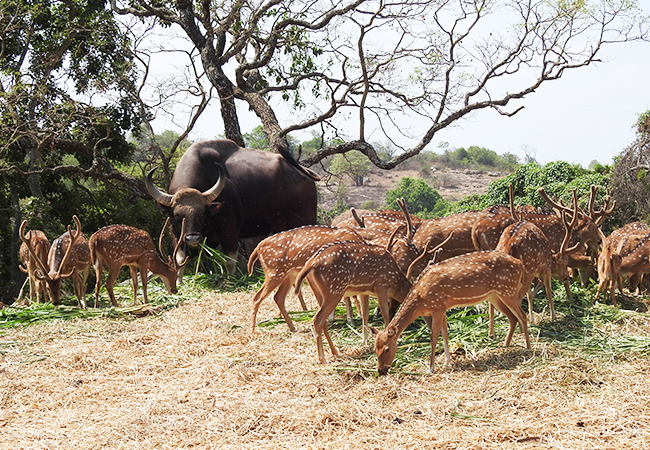
The drive begins in the 68-hectare Herbivore Safari, developed before the 1970s and opened to visitors in 2002. Spotted deer, sambar deer, nilgai, gaur and blackbuck share this wide enclosure. Feeding points near the road can offer a view of mixed groups, while young deer and gaur may be seen because several species breed within the area.
Five interconnected lakes retain water through the seasons. Keep an eye on their edges for water birds and reptiles as well as deer: common moorhen, jacana, cormorants, kingfishers, pond herons, night herons, Brahminy kites and peafowl are among the birds reported here. In warmer weather, sambar may use the water and slush ponds to cool down.
Bear Safari
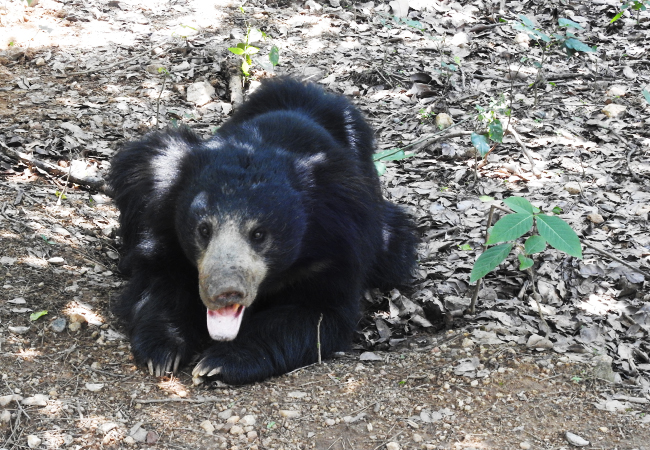
This 20-hectare area is home to rescued sloth bears, including many formerly exploited as dancing bears and others rescued after conflict or as abandoned cubs. A dry moat, solar fencing and a double-gate system form part of the enclosure’s safety design.
During the day, compatible groups range through the habitat. Seasonal fruit, honey and other food are scattered to encourage foraging, and the bears can dig for termites and use natural burrows in hot weather. Their night holding facilities are managed in collaboration with Wildlife SOS; it is a care setting, so quieter animal behaviour is entirely normal.
Leopard Safari
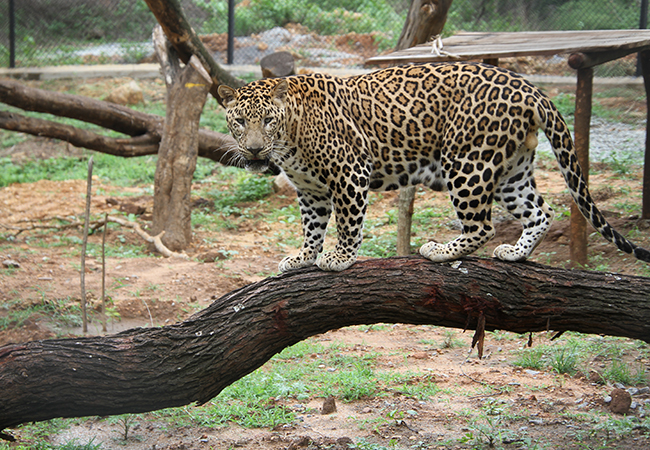
The Leopard Safari uses the national park’s uneven ground, rock formations and semi-deciduous cover to introduce visitors to these elusive predators. The 20-hectare enclosure has rail fencing and holding houses linked to a smaller kraal and the main field. Watch patiently: leopards are built to disappear into cover.
Bannerghatta also has a free-ranging leopard population in the wider landscape. The safari’s captive leopards—including cubs rescued from across Karnataka—help explain why human–leopard conflict occurs and why coexistence and conservation matter. The current leopard wing was inaugurated in June 2024.
Lion Safari
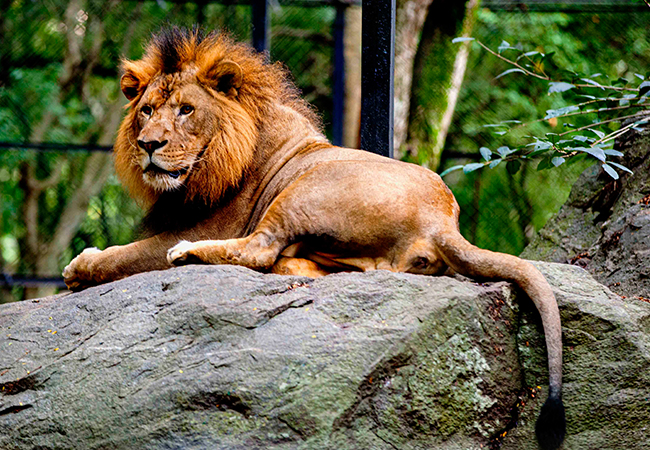
The lion section has chain-link barriers, moats, rail lines and a double-gate system. Prides are placed in the safari field in compatible groups and on rotation. If you are lucky, you may see lions resting or interacting near the lake and bamboo clusters; inactivity is also a perfectly natural part of a big cat’s day.
Tiger Safari
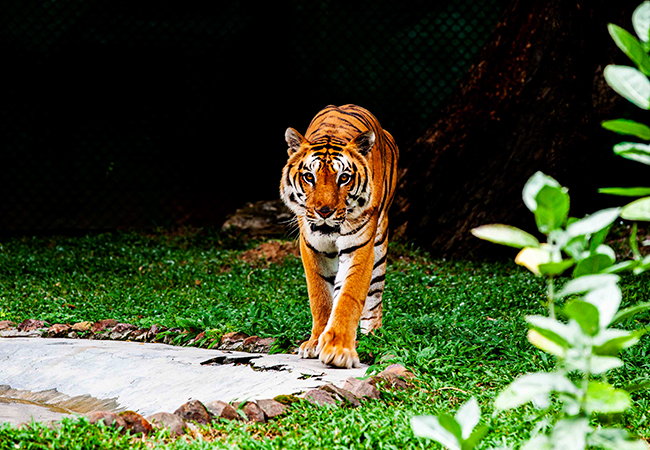
The final section is home to coloured and leucistic Royal Bengal tigers. Tall grass and bamboo thickets offer camouflage, so the pleasure is often in the searching: a tiger may be scent-marking, clawing a tree, using water, resting in grass or briefly appearing beside the road. Keep expectations gentle and your camera ready—without making noise to prompt an encounter.
More than the animals beside the road
On the return from the tiger section, the route offers a glimpse of the wider Bannerghatta National Park landscape. The Biological Park sits at the northern tip of the Mysore Elephant Reserve, in terrain of broken hills, rocky outcrops and coarse granite and gneiss. Its vegetation is similar to the surrounding forest, with trees including peepal, Indian fig, neem, gooseberry and ashoka attracting birds and other wildlife.
This setting combines southern tropical dry deciduous forest on the upper, red-gravelly ground with moister deciduous forest in sandy-loam valleys. That ecological backdrop is a useful reminder: the safari is an educational, managed encounter with captive animals beside a much larger, living forest system.
Make the safari a good experience for everyone
- Arrive early, especially at weekends and during school holidays. Safari inventory can be limited.
- Do not tap windows, call out, feed animals or ask the driver to stop for a photograph. The animals’ welfare comes first.
- Bring a camera or phone, but expect reflections through vehicle windows. A quiet, patient view is more rewarding than chasing a close-up.
- Pair the safari with either the zoo or Butterfly Park if you have only half a day. See the full Bannerghatta visitor guide for a sensible visit order.
- Confirm the latest ticket type, tariff, safari status and timings directly with the Biological Park before travelling.
Bannerghatta safari FAQs
Which animals can I see on the safari?
The designated sections cover herbivores, sloth bears, leopards, lions and tigers. Sightings vary because animals can be in cover, resting, in different compatible groups or managed off-route.
Can I drive my own car through the safari?
No. The safari is experienced in protected, closed buses and jeeps arranged by the park with KSTDC.
When is the best time to do the safari?
Take the earliest available safari after arriving. It protects the rest of your day for the zoo or Butterfly Park and gives you more flexibility if queues are longer than expected.